


TN Electrical × PIXIE
When a heritage rewire became a showcase for creative electrical problem solving
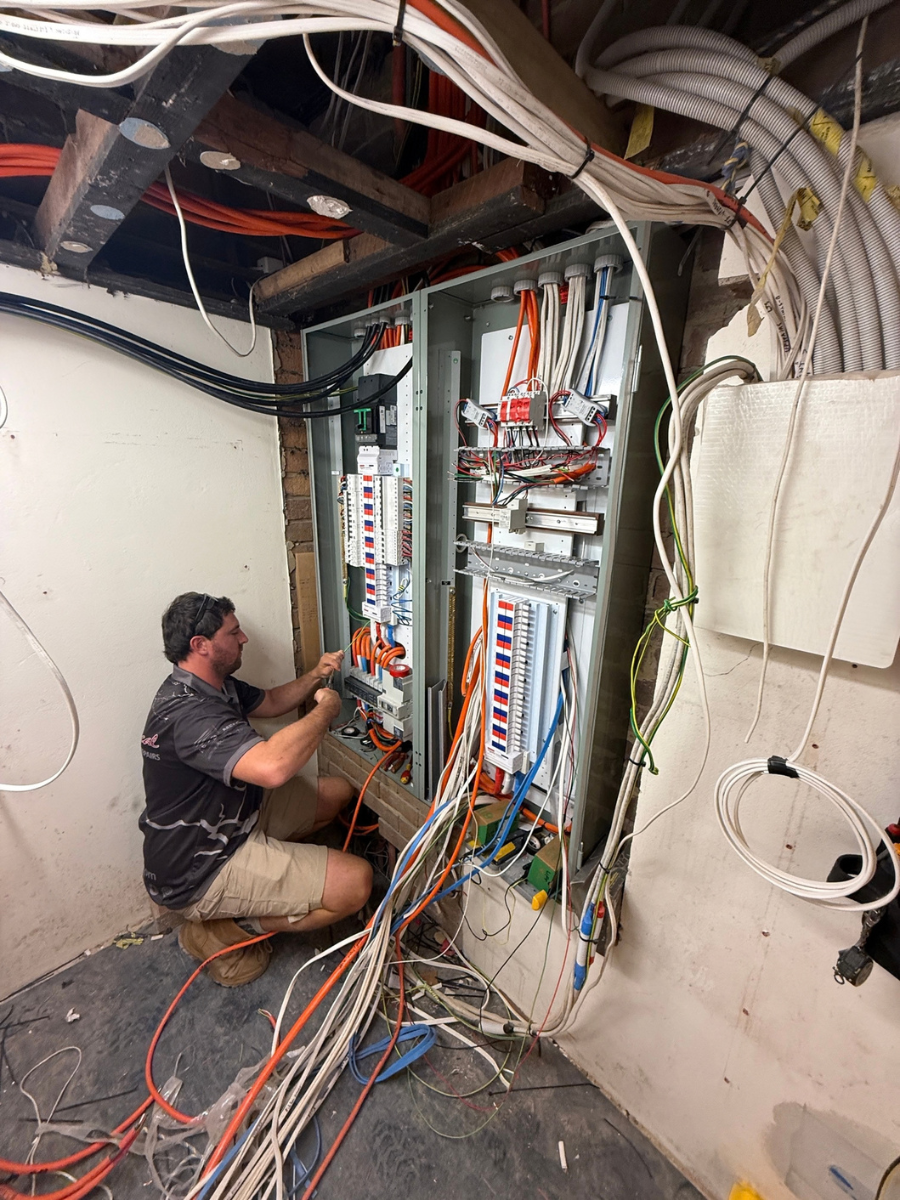
What began as a relatively small bathroom renovation evolved into a major renovation and complete electrical rewire of a heritage-listed NSW home.
Key Takeouts
A wiring problem, not a smart home
Interestingly, the homeowners hadn't set out to install a smart home or control system. PIXIE became part of the project because John recognised that a wireless control architecture could solve the practical wiring problem while still delivering the finish they wanted.
A flexible problem-solving toolkit
Rather than approaching PIXIE simply as a smart home system, TN Electrical used the platform as a flexible electrical problem-solving toolkit. Some applications were planned. Others emerged because TN Electrical realised that once PIXIE was available at a particular location, it could become part of the solution to the next problem.
Systems that work together
What makes this project particularly interesting isn't the number of PIXIE products installed. It's how they were used. TN Electrical didn't design the property around PIXIE. They used PIXIE to make the property work the way the homeowners wanted.
The Project
What began as a relatively small bathroom renovation evolved into a major renovation and complete electrical rewire of a heritage-listed NSW home.
For TN Electrical, the project would ultimately become much more than a rewire.
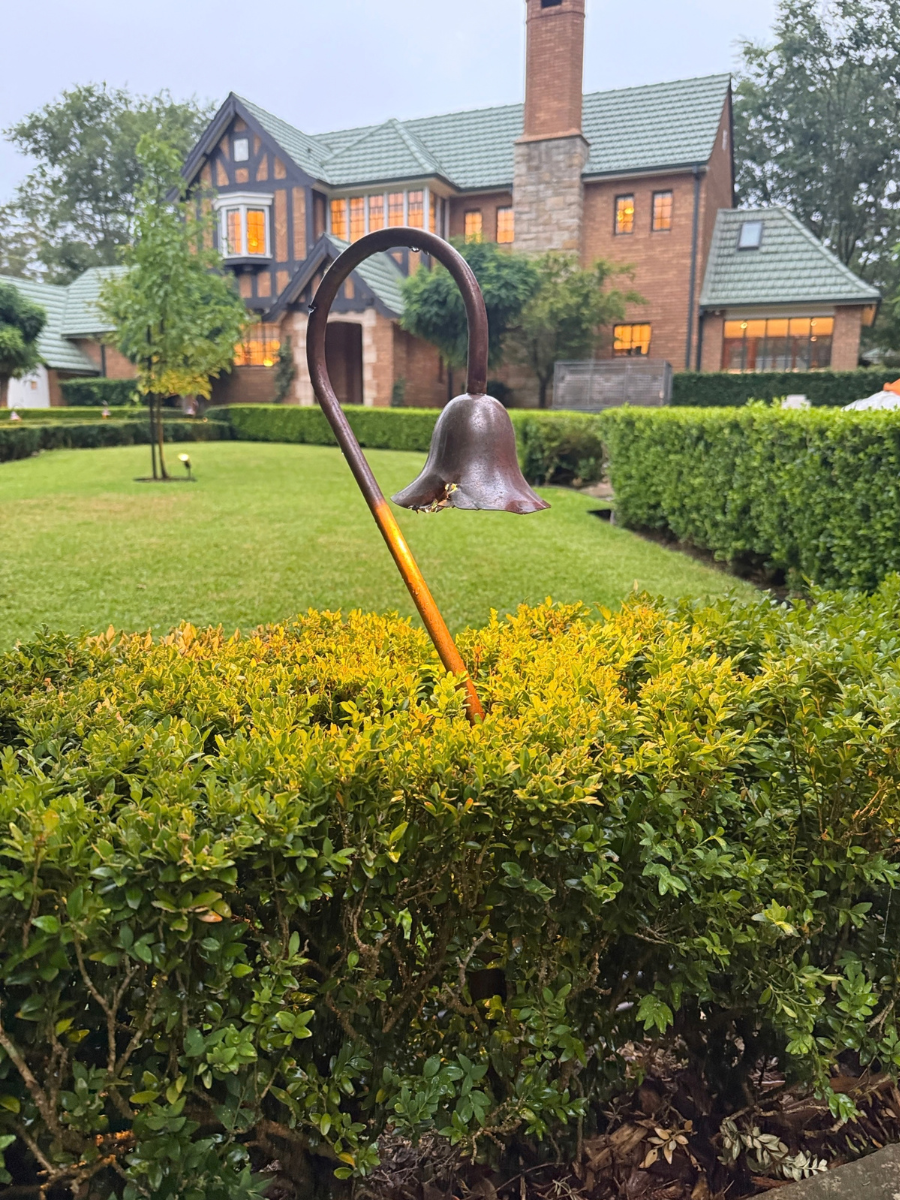
A demanding architectural brief, difficult double-brick and concrete construction, remote gates, irrigation, landscape lighting, generator ventilation, electric fencing and even automated access for the family dogs created a series of unusual electrical challenges.
Rather than approaching PIXIE simply as a smart home system, TN Electrical used the platform as a flexible electrical problem-solving toolkit.
And interestingly, that wasn't the original plan.
It started with a wiring problem, not a smart home
During initial electrical testing, John from TN Electrical identified that the home's existing cabling was old and no longer compliant. With a substantial rewire required, the homeowners decided to expand the scope of the renovation.
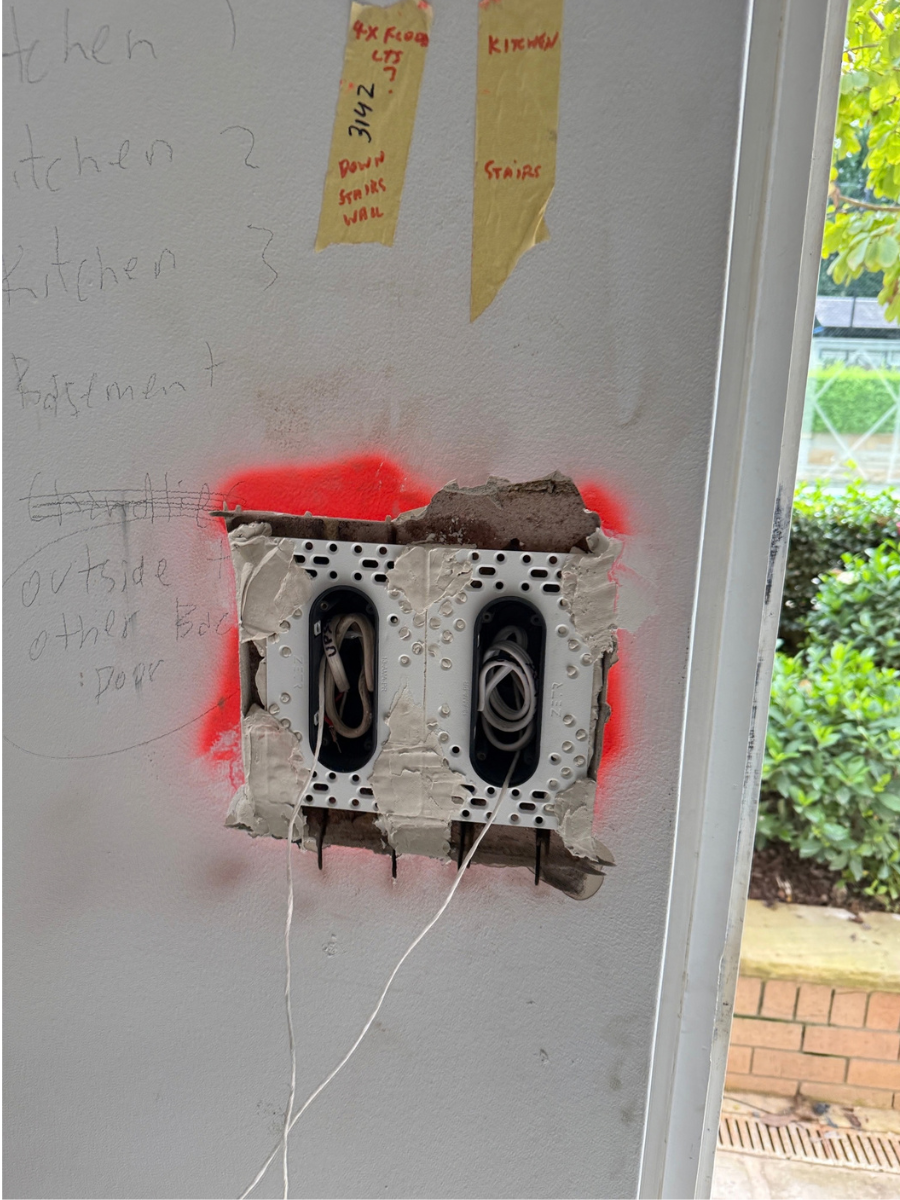
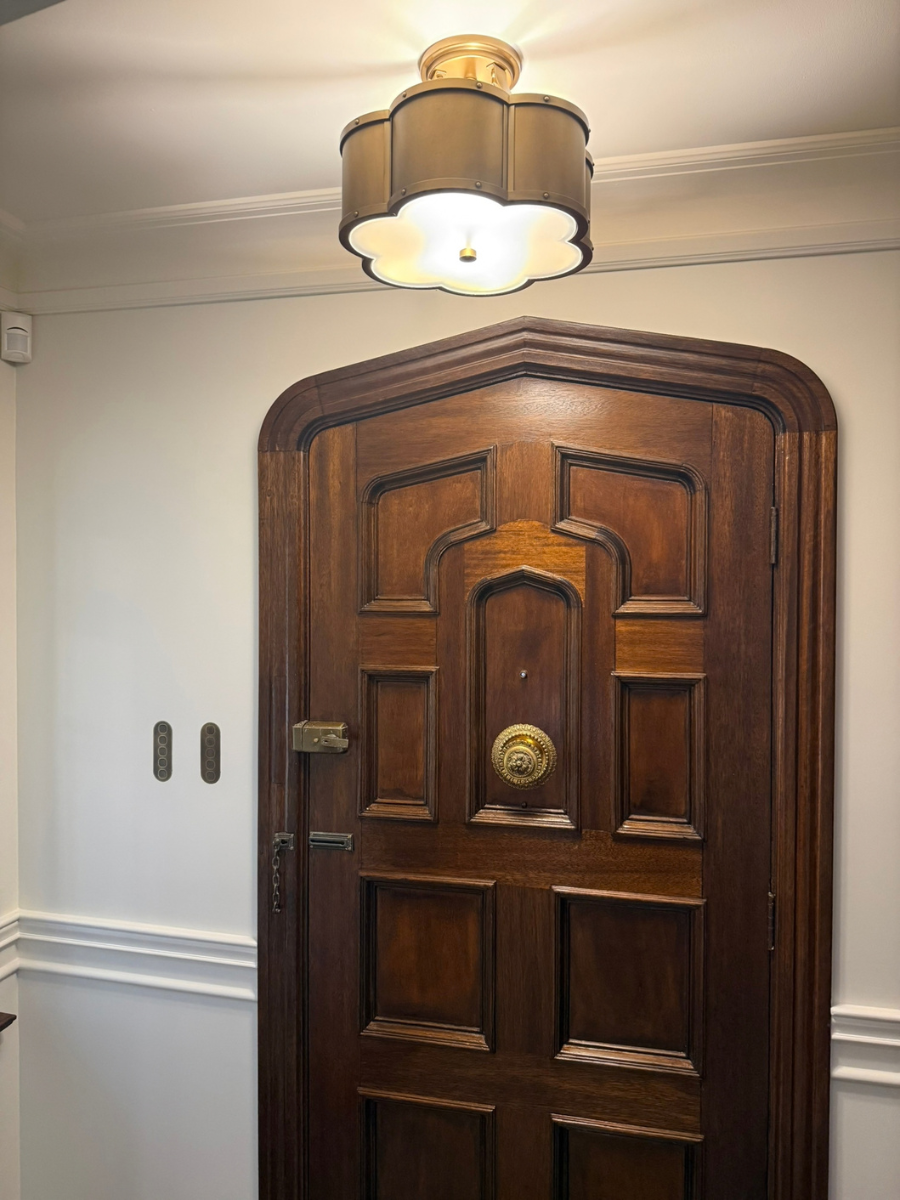
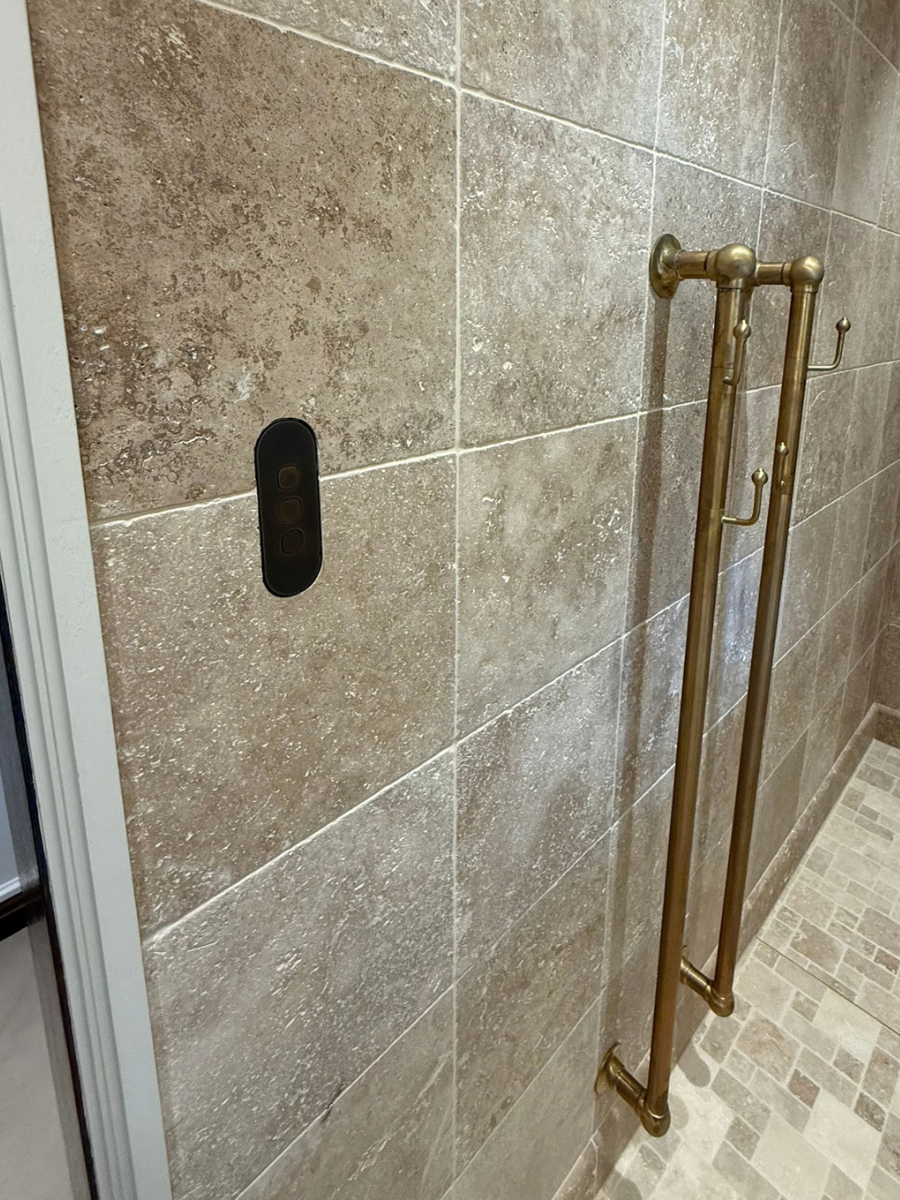
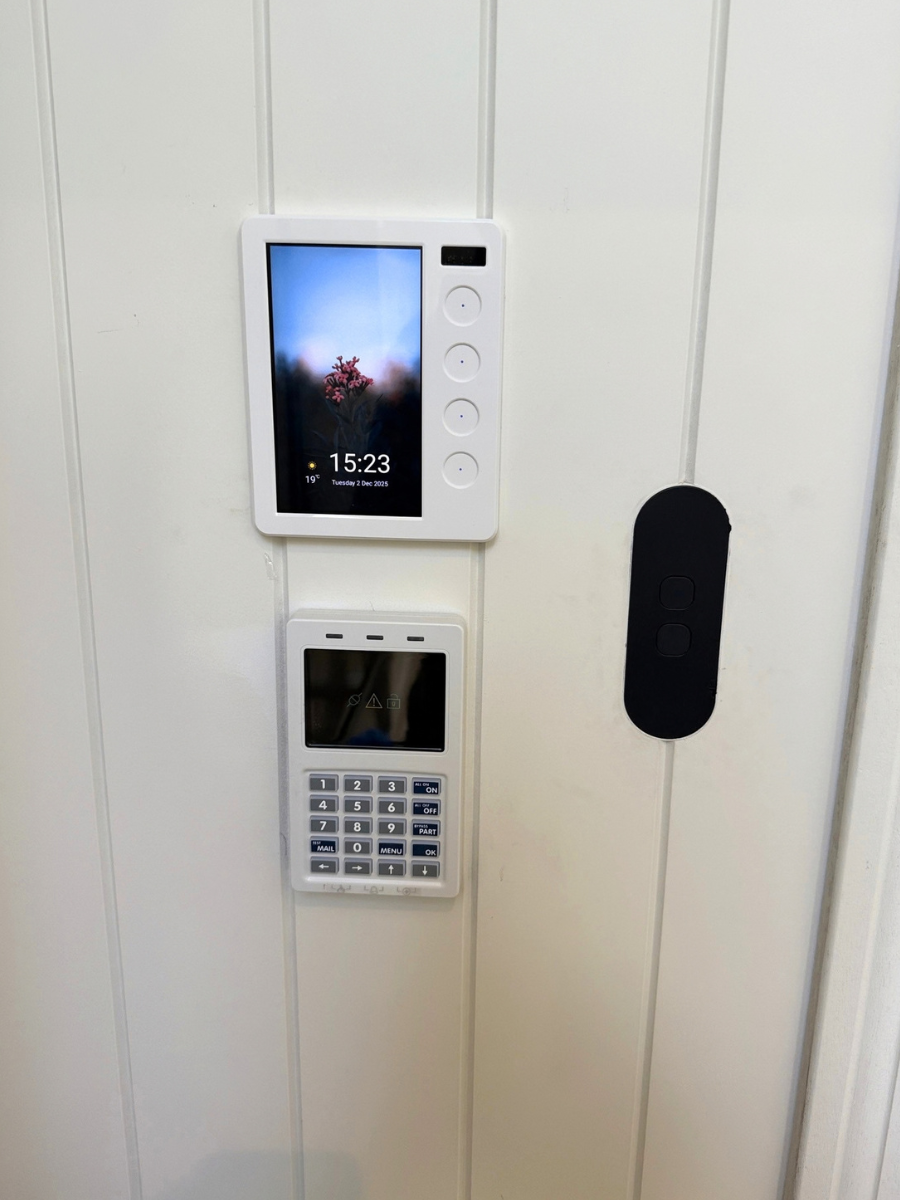
One of the key design requirements was the use of flush-mounted ZETR wall plates, including 3, 4 and 5-gang configurations. The brass finishes complemented the aesthetic the homeowners wanted to achieve, but the construction of the home presented a significant challenge.
With substantial double-brick and concrete construction, getting the amount of conventional load and switch wiring required behind the larger ZETR plates was going to be extremely difficult.
Interestingly, the homeowners hadn't set out to install a smart home or control system.
PIXIE became part of the project because John recognised that a wireless control architecture could solve the practical wiring problem while still delivering the finish they wanted.
Separating the control from the load
For simpler 1 and 2-gang locations, TN Electrical installed PIXIE dimmers and switches at the wall, with the load and switch wiring located there.
For larger 3, 4 and 5-gang locations, John took a different approach.
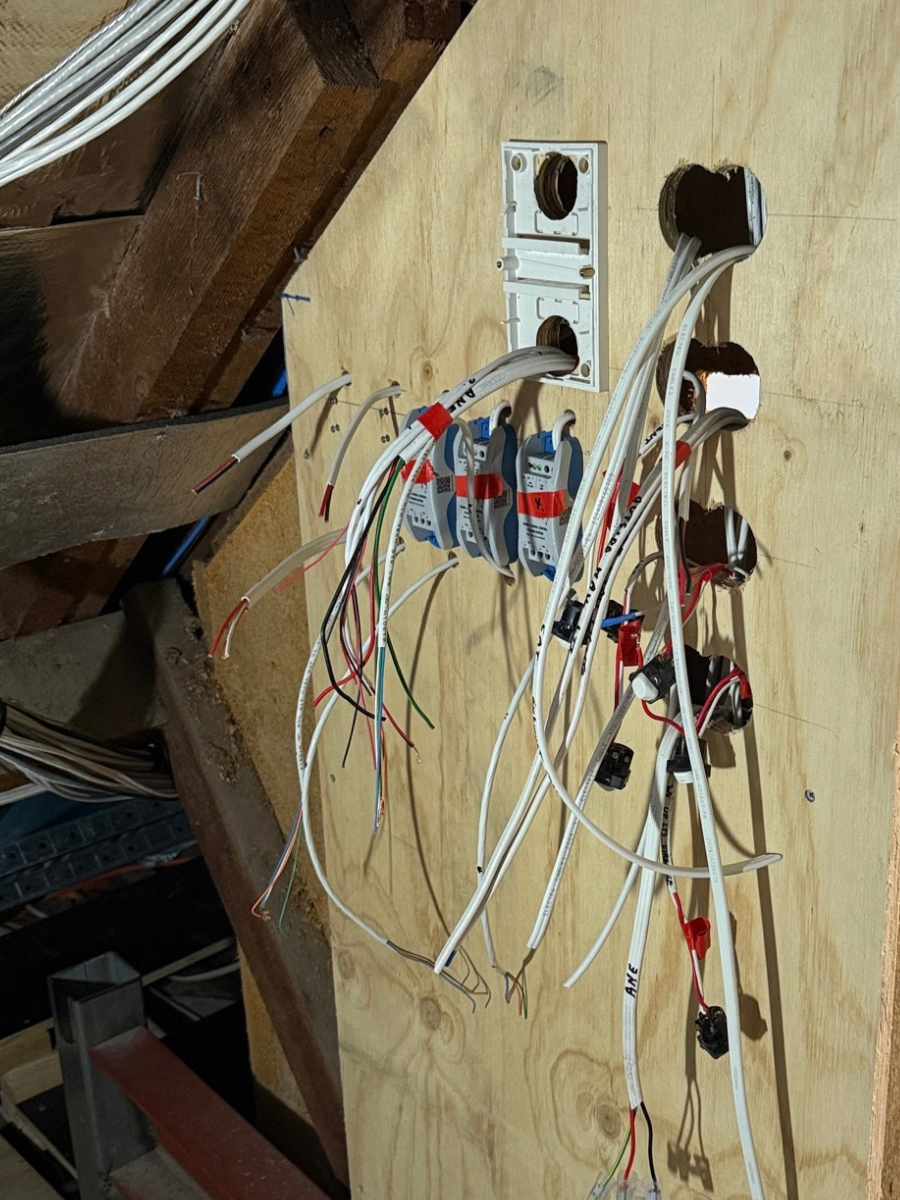
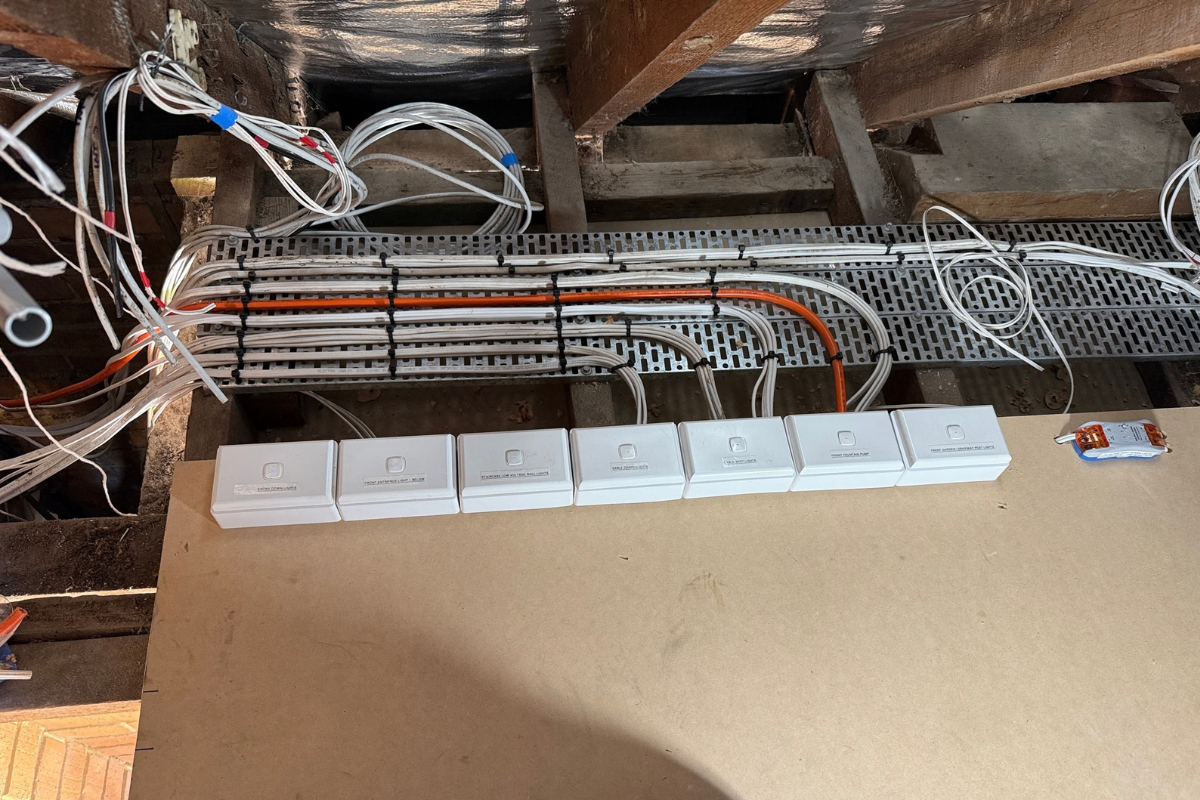
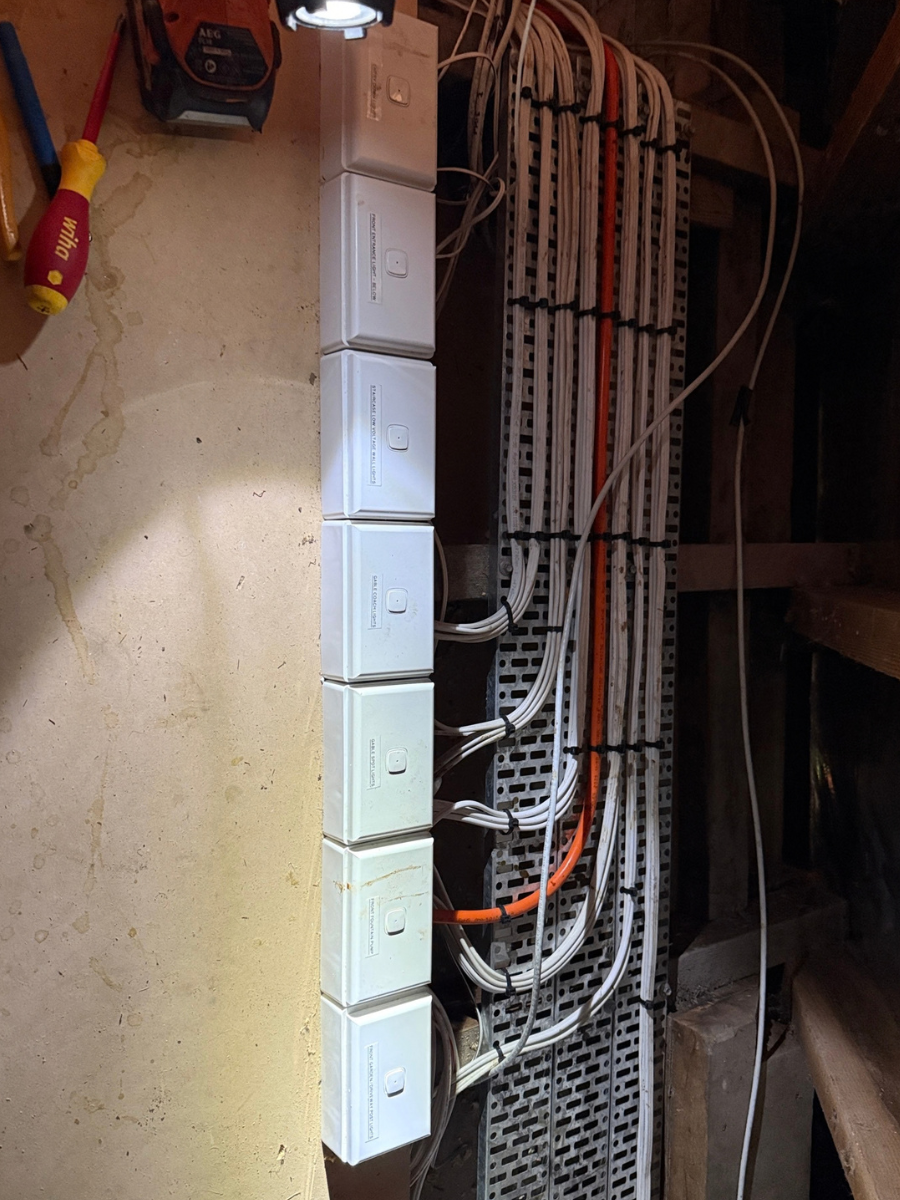
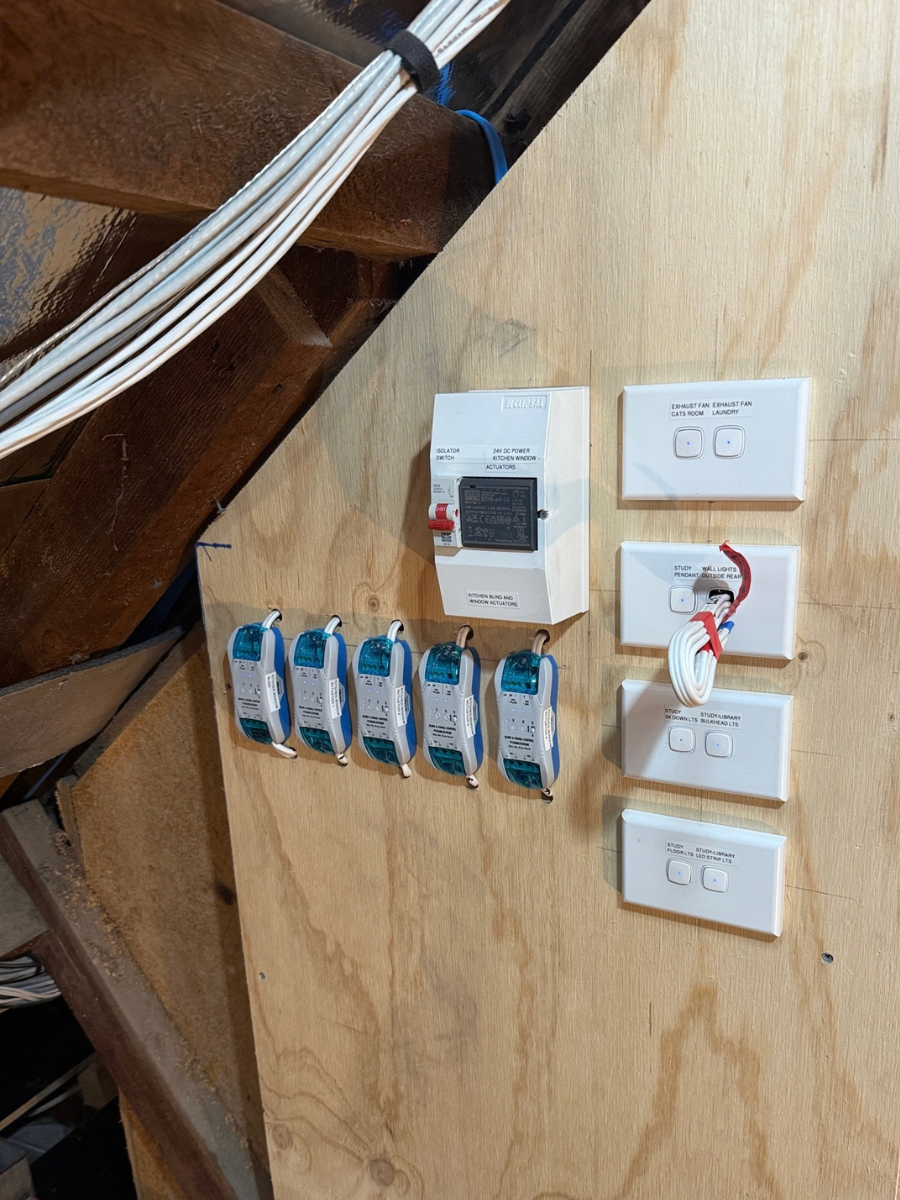
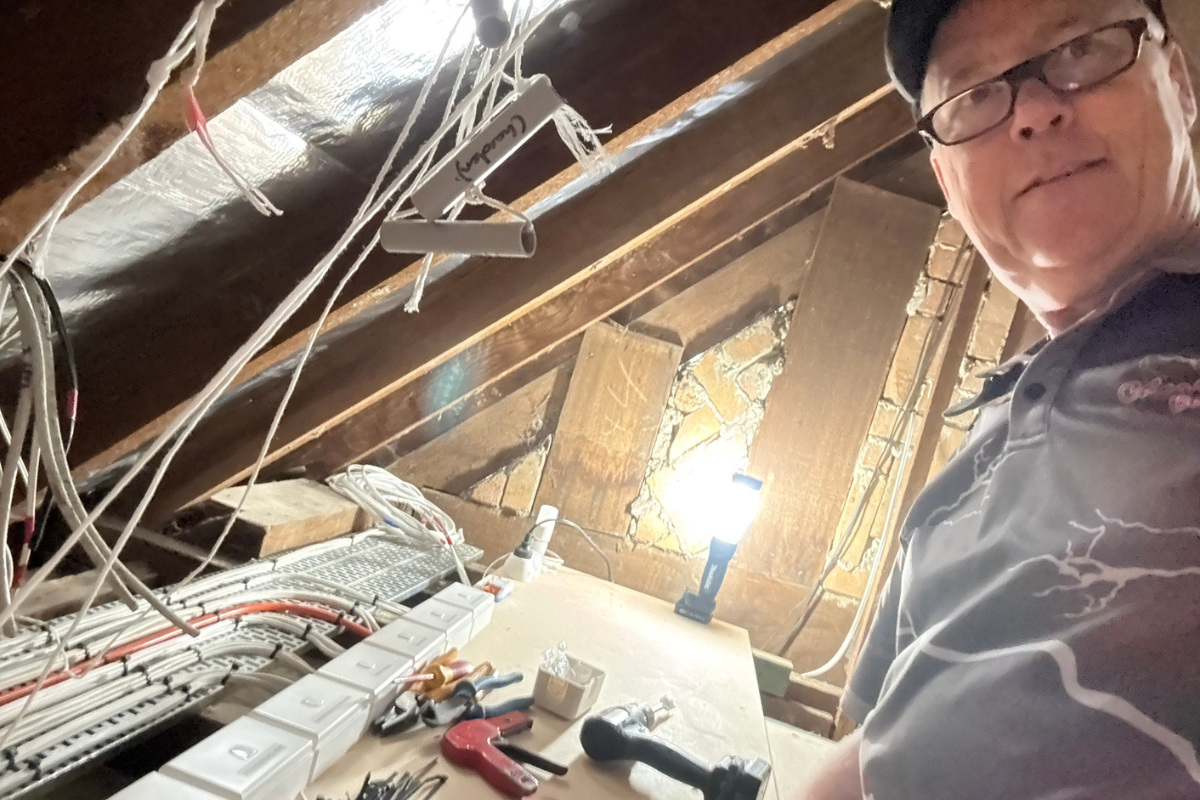
PIXIE Multifunction Controllers were installed at the wall, requiring only active and neutral. The PIXIE dimmers and switches controlling the actual loads could then be located remotely at strategic, accessible locations.
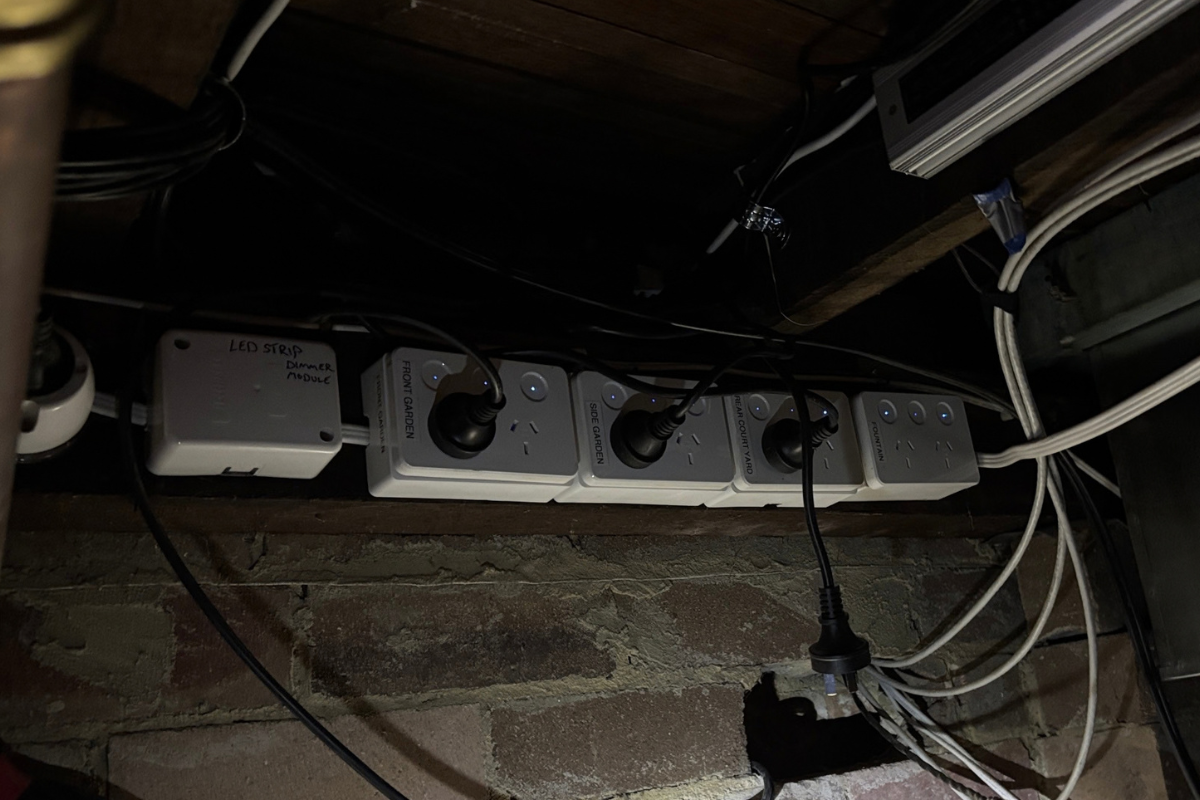
On the ground floor, these were installed in junction boxes in accessible ceiling spaces, including locations accessible through downlight openings.
On the first floor, TN Electrical created multi-gang PIXIE assemblies on mounting blocks within the ceiling space, grouping multiple dimmers and switches together.
This allowed TN Electrical to create the larger 3, 4 and 5-gang ZETR wall plates the homeowners wanted without having to accommodate all of the conventional load wiring behind each plate.
Building the mesh around the building
The home's double-brick and concrete construction also meant wireless communication needed careful consideration.
To create a robust PIXIE Bluetooth mesh throughout the property, John installed PIXIE Mesh Boosters at the smoke detector locations.
These locations already provided permanent active and neutral, making them a simple and strategic way to strengthen the mesh throughout the home.
Making the technology disappear
The ZETR wall plates became another important part of the finished project.
Because they were flush mounted, installation and plastering needed to be extremely precise. John personally undertook the plastering around the plates, producing a millimetre-perfect finish.
The brass hardware provided the aesthetic the homeowners wanted, while the PIXIE technology largely disappeared behind it.
At this point, PIXIE had solved the original problem.
But TN Electrical didn't stop there.
"It started with a wiring problem, not a smart home."
Once PIXIE was there, the possibilities changed
With a reliable PIXIE network established throughout the home, TN Electrical began using the system to solve other challenges around the property.
Some involved straightforward control. Others required combining PIXIE devices, inputs, schedules, groups and logic in ways that go well beyond conventional lighting control.
What PIXIE went on to solve
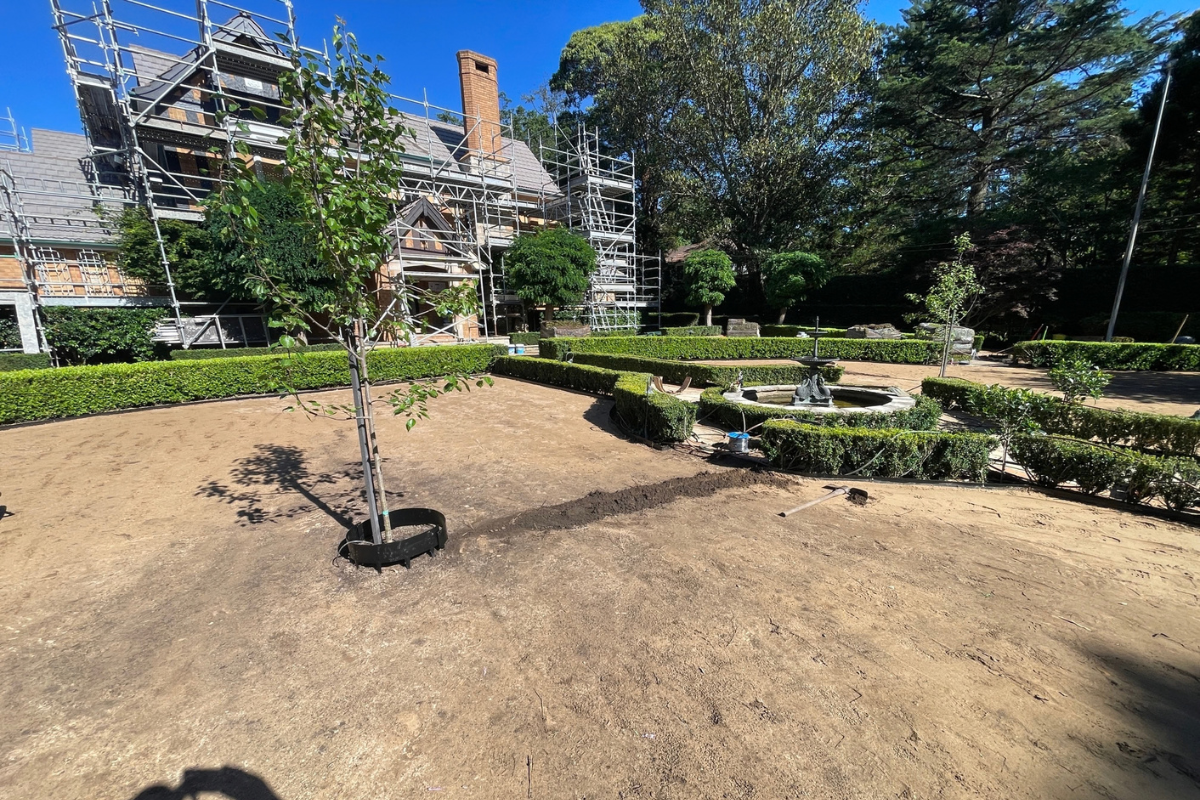
Taking PIXIE all the way to the front gate
The property's operable front gate is located a considerable distance from the main house.
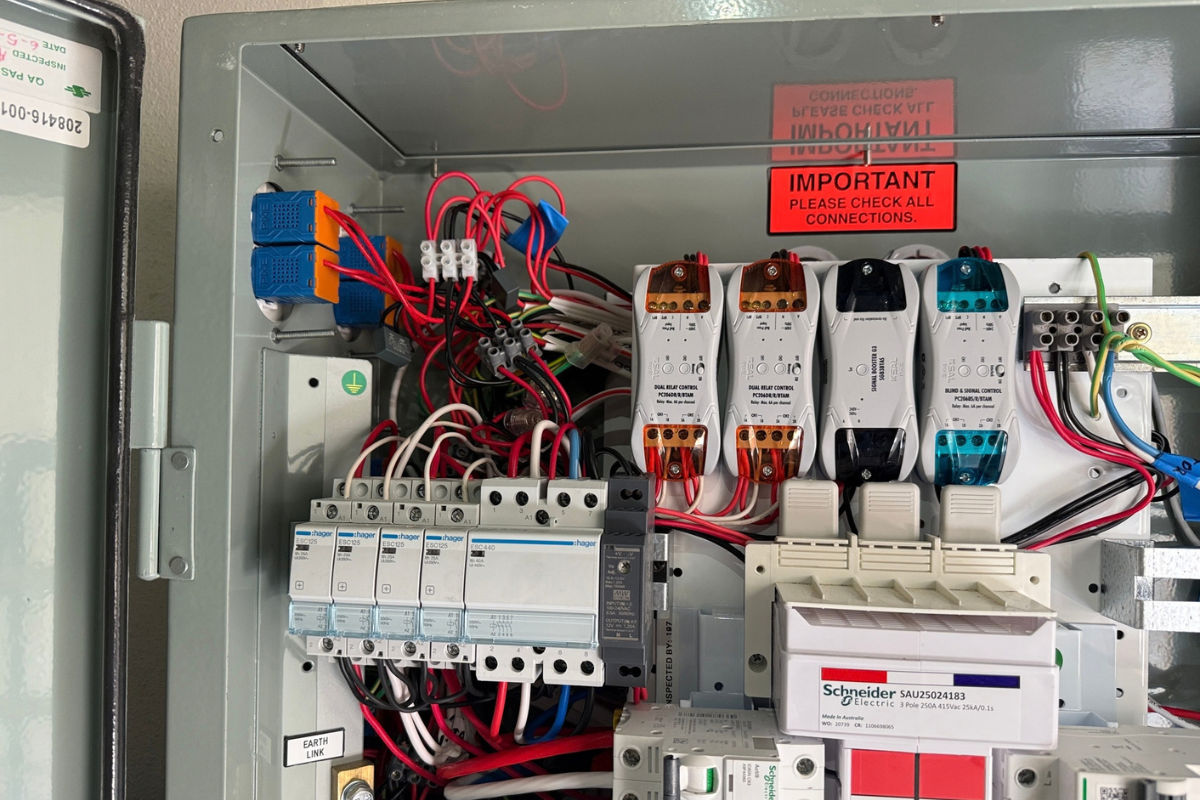
TN Electrical used PIXIE Portal to extend PIXIE control to the remote gate location, where a PIXIE Blind & Signal Controller could interface with the automatic gate.
But getting PIXIE to the gate created another opportunity.
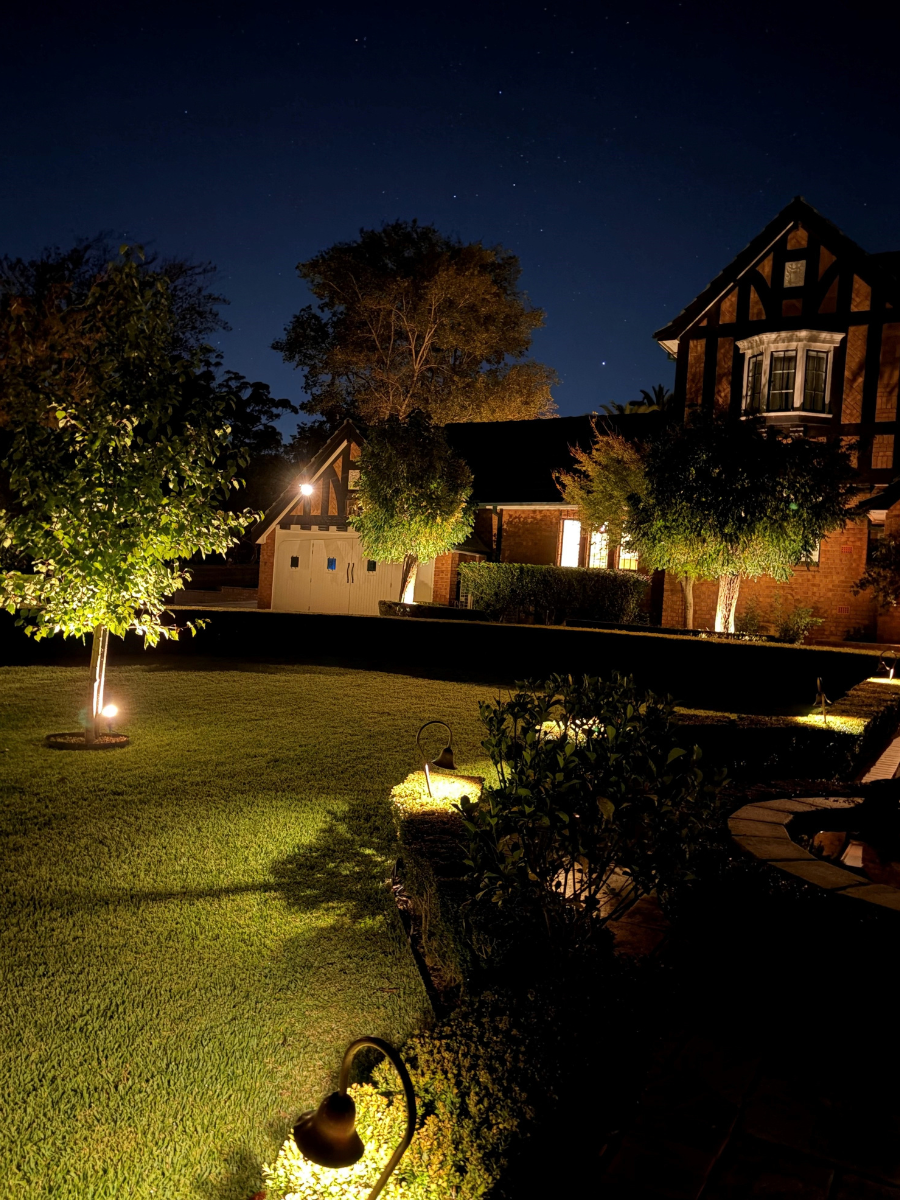
With PIXIE now available at that location, relay controllers installed within the gate control board could also provide control of nearby garden and landscape lighting, making those loads transparently accessible through the broader PIXIE system.
One solution effectively opened up an entirely new control point on the property.
Letting the irrigation system call for its own pump
The same remote location also included irrigation infrastructure.
The irrigation system requires a separate pump, but that pump only needs to operate while irrigation is actually taking place.
Rather than simply scheduling the pump independently, TN Electrical used the irrigation controller's contact closure as an input to a PIXIE Translator.
When the irrigation controller calls for irrigation, PIXIE can activate the pump. When irrigation finishes, the pump can be turned off again.
It's a relatively simple piece of automation, but an excellent example of PIXIE integrating with an existing third-party system rather than requiring that system to be replaced.
"Once PIXIE reached the gate, an entirely new set of possibilities opened up."
An electric dog fence that automatically locks the gate
Because the property is heritage listed, modifying the existing approximately five-foot perimeter fence wasn't desirable.
The homeowners have dogs, so an electrified rail was installed above the existing fence to discourage them from attempting to jump over it.
That introduced another issue.
Someone entering or leaving the property might not realise the perimeter fence was currently electrified.
TN Electrical used PIXIE to create an interlock between the electric fence and the automatic front gate.
When the electric fence is energised, PIXIE prevents the front gate from being operated. The gate therefore cannot be opened while the electric fence is active.
Rather than controlling two independent electrical systems, PIXIE allows the state of one system to determine whether another can operate.
A welcome-home scene that only exists after dark
TN Electrical also combined the remote gate installation with a PIXIE Outdoor Sensor, used as a PE/sunset sensor.
After ambient light falls below the configured level, the system enables additional PIXIE logic associated with the gate.
If the homeowners arrive home and open the gate after dark, the gate event can trigger additional lighting, creating a welcome-home scene as they enter the property.
During daylight hours, that additional action is effectively disabled.
The gate still operates normally, but opening it doesn't unnecessarily trigger the arrival lighting.
Making every morning start at the right light level
PIXIE dimmers normally use their memory function so that when a light is switched back on, it returns to its previous dimming level.
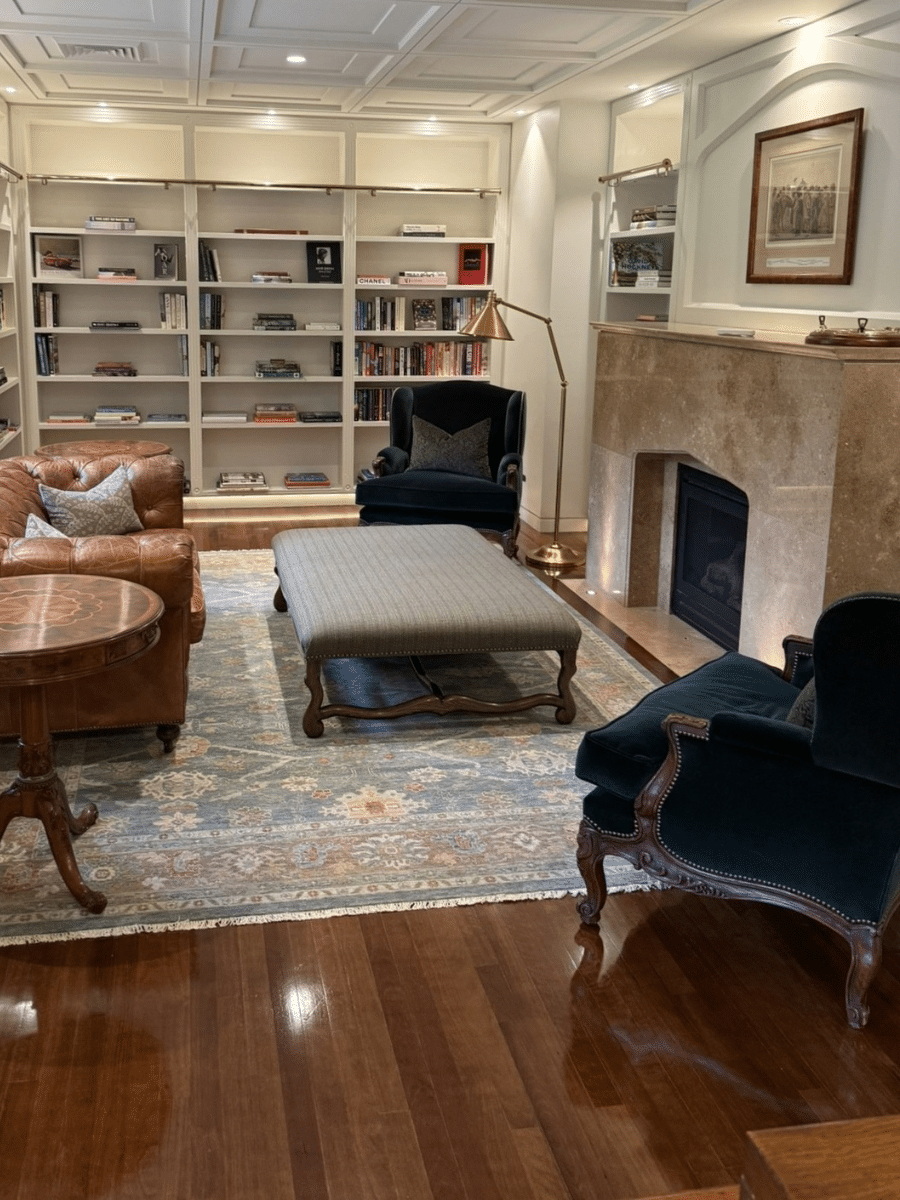
For this home, however, the owners wanted particular areas to start each morning at predetermined lighting levels, regardless of how those lights had been used the previous evening.
TN Electrical created PIXIE groups corresponding to preset levels, for example 60%, 50%, 40% and 30%, with the appropriate dimmers assigned to each group.
Then, at approximately 3:00 am each morning, scheduled commands are sent to those groups to establish their required dimming levels, followed immediately by an OFF command.
The lights therefore don't remain on overnight.
But because the PIXIE dimmers retain their last level in memory, when someone next presses the switch in the morning, each light comes on at its predetermined level.
It's a clever combination of groups, schedules and the standard PIXIE dimmer memory function to achieve a result that might otherwise require much more complex programming.
A PIXIE-controlled door for the dogs
The family's dogs have their own dedicated room, with a spring-loaded door secured by a solenoid-operated latch.
TN Electrical connected the solenoid to a PIXIE Blind & Signal Controller.
When it's time to let the dogs out, PIXIE provides a short pulse to the solenoid. The latch releases, the spring-loaded door opens and the dogs can head outside.
An unusual application, but one that would soon inspire a solution to a much more serious problem elsewhere on the property.
"A solution originally created for the dogs became the inspiration for solving a generator ventilation problem."
The dog door idea solves a generator ventilation problem
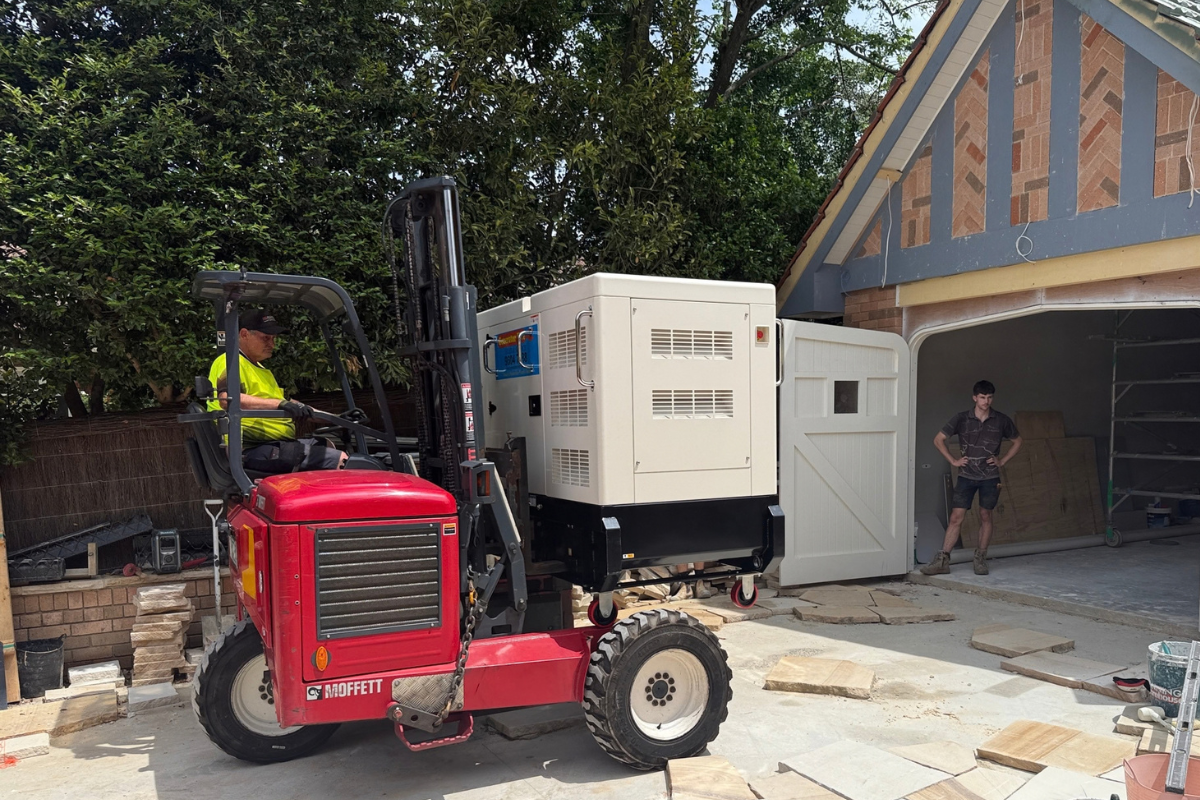
The property also has a backup generator.
When mains power is lost and the generator starts, ventilation fans controlled through PIXIE are activated to help remove heat and provide ventilation.
However, the generator is installed in a relatively small room and TN Electrical found that the fans alone couldn't achieve the required airflow because of an air-balancing problem.
The solution came from the automated dog door.
TN Electrical applied the same basic concept to the generator enclosure, using spring-loaded doors with solenoid-controlled latches.
A generator-run signal is received through the dry-contact input of a PIXIE Translator.
PIXIE can then respond with several actions:
- release the solenoids so the ventilation doors spring open
- activate the ventilation fans
- provide the substantially greater airflow required by the generator room
- send the homeowner a push notification advising that the generator has started.
It's a particularly good example of the value of having different systems accessible through the same flexible control platform.
Scheduling an electrical filter around NSW ripple control
The home's phase-dimmed LED lighting presented another challenge familiar to many NSW electricians: off-peak ripple-control injection and associated LED flicker.
In this installation, the selected third-party luminaires meant the PIXIE rippleShield solution couldn't be used.
A GAYRAD filter was therefore installed at the switchboard to mitigate the incoming ripple-control signal.
While the filter addressed the expected ripple-related flicker, TN Electrical found that having it permanently in circuit appeared to introduce a separate intermittent interference issue at other times.
Their solution was to control when the filter was actually in circuit.
Using PIXIE scheduling, the filters are brought into circuit around the periods when ripple-control interference is most likely to affect the installation, approximately 5:00 am to 7:00 am and 9:00 pm to 11:00 pm in this particular installation.
Outside those periods, the filters are taken back out of circuit.
Rather than accepting one electrical problem as the price of solving another, TN Electrical used PIXIE scheduling as part of the solution.
"The smartest solutions weren't necessarily complicated. They came from combining simple PIXIE functions in clever ways."
More than a smart home
What makes this project particularly interesting isn't the number of PIXIE products installed.
It's how they were used.
A project that began with the practical problem of getting sophisticated multi-gang controls into a difficult heritage building ultimately saw PIXIE used for:
Some applications were planned. Others emerged because TN Electrical realised that once PIXIE was available at a particular location, it could become part of the solution to the next problem.
That's perhaps the strongest lesson from the project.
TN Electrical didn't design the property around PIXIE.
They used PIXIE to make the property work the way the homeowners wanted.
"Rather than controlling individual systems, PIXIE allowed TN Electrical to make those systems work together."
PIXIE enabled the design rather than dictating it.
What Was Installed
Ready to design your PIXIE smart home?
Upload your floor plans and our team will mark up exactly where each product goes, plus a complete bill of materials your electrician can quote from. Free, no obligation.